sábado, 8 de agosto de 2015

Discussão de Piketty

Challenging the Empirical Contribution of Thomas Piketty's Capital in the Twenty-First Century

Phillip W. Magness, Institute for Humane Studies, George Mason University

http://journal.apee.org/index.php?title=Private.Enterprise.v30.n1.2015.Spring_parte1.pdf

Economia de matchmaking e market design

Who Gets What — and Why: The New Economics of Matchmaking and Market Design Kindle Edition

Modelo de negócios

Steve Jobs: “My model for business is the Beatles: They were four guys that kept each other’s negative tendencies in check; they balanced each other. And the total was greater than the sum of the parts. Great things in business are never done by one person; they are done by a team of people.” |

sexta-feira, 7 de agosto de 2015

Elinor Ostrom

quinta-feira, 6 de agosto de 2015

5 mitos sobre a bomba nuclear

 
 Gregg Herken is an emeritus professor of U.S. diplomatic history at the University of California and the author of “The Winning Weapon: The Atomic Bomb in the Cold War” and “Brotherhood of the Bomb: The Tangled Lives and Loyalties of Robert Oppenheimer, Ernest Lawrence, and Edward Teller.” As a Smithsonian curator in 1995, he participated in early planning for the National Air and Space Museum’s Enola Gay exhibit.
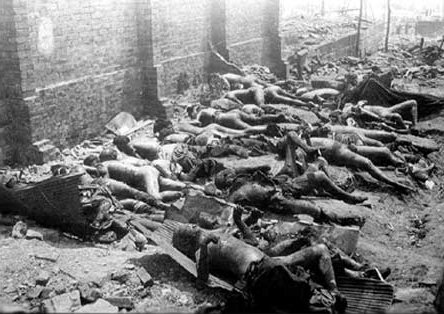
On Aug. 6, 1945, the United States dropped an atomic bomb on the Japanese city of Hiroshima. Another bomb fell Aug. 9 on Nagasaki. Decades later, controversy and misinformation still surround the decision to use nuclear weapons during World War II. The 70th anniversary of the event presents an opportunity to set the record straight on five widely held myths about the bomb.
1. The bomb ended the war.

Robert Conquest

Robert Conquest, a historian whose landmark studies of the Stalinist purges and the Ukrainian famine of the 1930s documented the horrors perpetrated by the Soviet regime against its own citizens, died on Monday in Stanford, ....
“The Great Terror: A Reassessment” included new information made available after the collapse of the Soviet Union. It was less a reassessment, however, than a triumphant vindication of the original edition, since newly released material from the Soviet archives supported Mr. Conquest’s findings at every turn.
during the Prague Spring, he published “The Great Terror: Stalin’s Purge of the Thirties,” a chronicle of Stalin’s merciless campaign against political opponents, intellectuals, military officers — anyone who could be branded an “enemy of the people.”
For the first time, facts and incidents scattered in myriad sources were gathered in a gripping narrative. Its impact would not be matched until the publication of Aleksandr Solzhenitsyn’s “The Gulag Archipelago” in 1973.
The scope of Stalin’s purges was laid out: seven million people arrested in the peak years, 1937 and 1938; one million executed; two million dead in the concentration camps. Mr. Conquest estimated the death toll for the Stalin era at no less than 20 million.
Mais

quarta-feira, 5 de agosto de 2015

História da pobreza desde 1820


O poder de ideias

Bourgeois Equality: How Ideas, Not Capital, Enriched the WorldBourgeois Equality: How Ideas, Not Capital, Enriched the World

Wednesday, 16 September 2015
What makes us better off? Dierdre McCloskey, Distinguished Professor of History, Economics, English, and Communication at the University of Illinois at Chicago, will deliver a lecture that argues ideas, rather than capital, play a crucial role.
In her talk, McCloskey will turn to social and intellectual history to claim that Europe is rich because of our openness to change. Her unique evaluation, challenging Weber, Keynes, Marx, and North, is based on the concluding volume of her trilogy The Bourgeois Era.
In her forthcoming book, Bourgeois Equality, McCloskey explores how dignity and liberty for commoners, unique to north western Europe for a time, produced the most surprising secular event in history: the Great Enrichment, from 1800 to the present. “Fantastically successful liberalism in the old European sense, applied to trade and politics as it was applied to science, music, painting and literature”. As the debate over inequality rages, McCloskey is optimistic that the liberal values of dignity and liberty will continue to allow societies to flourish.
Mais

Gastos para educação

Brasileiros gastam mais com salão de beleza que com educação, diz estudo

Gasto das famílias em salões é de R$ 20,3 bi por ano,

Liberalismo clássico

download gratuito

Classical Liberalism: A Primer

New IEA publication looks at the history and ideas behind classical liberalism

terça-feira, 4 de agosto de 2015

A greve continua


de Soto contra Piketty

Hernando De Soto dissects Thomas Piketty’s apocalyptic political thesis 

PIB e atividade econômica

Fooled by GDP Economic activity versus economic growth 

These misunderstandings of economic growth take two forms. One form is to assume that the traditional measurements we use to track economic activity also describe economic growth, and the other form is to mistake the production of material things for economic growth.
Often at the core of this confusion is the concept of gross domestic product (GDP).
Mais

segunda-feira, 3 de agosto de 2015

Capitalismo vai vir depois o imperalismo

Capitalism Will (Eventually) Displace Imperialism


[This is the most important excerpt of Joseph Schumpeter’s 1918 book The Sociology of Imperialisms. He examines the history of empire in its many iterations and takes on the Marxist theory the capitalism and imperialism are linked. He rejects that view, and argues the exact opposite. Capitalism, built on a social structure of trade and mutual benefit, is anti-imperialist. All classes discover greater benefit from economic engagement than they could ever gain through conquest, violence, and pillaging. War itself, writes Schumpeter, is like nationalism itself, an old-world holdover from the age of autocracy, and all social, political, and economic forces are gradually working toward its elimination.

domingo, 2 de agosto de 2015

Mestrado em Economia

Mestrado em Economia

Começa no dia 17/09/2015

Ministrado em Português

Conheça nosso programa da Pós Graduação em Economia
Mais

sábado, 1 de agosto de 2015

Che - uma máquina de matar

Che Guevara, la máquina de matar

  • UNA VISIÓN CRUDA Y DESMITIFICADORA DE LA TRAYECTORIA DEL REVOLUCIONARIO ARGENTINO COLABORADOR DE FIDEL CASTRO

Este texto es un amplio extracto de un artículo escrito por el autor, originalmente en inglés, y publicado en la revista norteamericana 'The Republic' con el título 'The killing machine'. La traducción es de Eva Cruz. Álvaro Vargas Llosa pasa una mirada crítica a la vida revolucionaria de Ernesto Che Guevara (1928-1967).

Mentiras históricas

12Why Americans Believe That Bombing Hiroshima Was Necessary


August 6, 2015, is the 70th anniversary of the atomic bombing of Hiroshima, a civilian city that had minimal military value, despite the claims of President Truman when he announced the event to the
The whole truth of what the Nuremburg tribunal would later help define as an international war crime and a crime against humanity has been heavily censored and mythologized ever since war-weary Americans in 1945 accepted the propaganda that the bombings were necessary to shorten the war and prevent the loss of a million US soldiers during the allegedly planned November 1945 invasion.
Of course, the reason that the United States wasn’t sanctioned like Germany was for the Jewish holocaust was that America was the victor and the occupier and thus it was in charge of making and enforcing the rules in the New World Order.
The United States military ambushed the equally defenseless Nagasaki City three days later with the second atomic bomb to ever be used against a civilian population (that no longer had any military value to Japan). “Fat Man”, the plutonium bomb named after Winston Churchill, was detonated before the Japanese leadership fully understood what had happened at Hiroshima.
Mais

sexta-feira, 31 de julho de 2015

Salário mínimo como instrumento de eugenia

The Eugenics Plot Behind the Minimum Wage

There really was a white male scheme to exterminate African Americans 

A careful look at its history shows that the minimum wage was originally conceived as part of a eugenics strategy — an attempt to engineer a master race through public policy designed to cleanse the citizenry of undesirables. To that end, the state would have to bring about the isolation, sterilization, and extermination of nonprivileged populations.
The eugenics movement — almost universally supported by the scholarly and popular press in the first decades of the 20th century — came about as a reaction to the dramatic demographic changes of the latter part of the 19th century. Incomes rose and lifetimes had expanded like never before in history. Such gains applied to all races and classes. Infant mortality collapsed. All of this was due to a massive expansion of markets, technology, and trade, and it changed the world. It meant a dramatic expansion of population among all groups. The great unwashed masses were living longer and reproducing faster.
Mais

Efeito do salário mínimo

Black Teens Are Fired When the Minimum Wage Rises

The sector where many work is part of the problem.

quinta-feira, 30 de julho de 2015

Educação privada

For-profit education

The $1-a-week school

Private schools are booming in poor countries. Governments should either help them or get out of their way

This pattern is repeated across Africa, the Middle East and South Asia. The failure of the state to provide children with a decent education is leading to a burgeoning of private places, which can cost as little as $1 a week (see article).
Mais

Beijos - nunca mais

(Foto: Thinkstock)

Beijo causa mais câncer do que bebida e cigarro

(Foto: Thinkstock)
Cigarro e bebida sempre são relacionados à saúde do ser humano como fatores agravantes e capazes de produzir doenças. Entretanto, um médico australiano destacou uma prática comum do dia a dia do ser humano e que pode ser tão letal quanto o tabaco e o álcool: o beijo.

Mahiban Thomas é chefe de cirurgia maxilo-facial, de cabeça e pescoço no Hospital Real Darwin, na Austrália. Segundo ele, em entrevista ao jornal “Metro”, o beijo pode ajudar a transmitir o vírus do papiloma humano, o HPV, uma família de vírus que pode levar ao cancro.

A relação entre câncer e o HPV é bem conhecida, mas na maior parte das vezes é relacionada ao câncer cervical.
Mais

Piketty - destribuição

How Piketty Misses the Point

By Deirdre N. McCloskey
Thomas Piketty has written a big book — 577 pages of text; 76 pages of notes; 115 charts, tables, and graphs — that has excited the left worldwide. First published in French in 2013, an English edition was issued last year to wide acclaim and a top position on the New York Times bestseller list. It has been a long time since a technical treatise on economics has had such a market. An economist can only applaud. And an economic historian can only wax ecstatic.
Mais

quarta-feira, 29 de julho de 2015

Escravidão

Um barão negro, seu palácio e seus 200 escravos

Família resgata memória de um dos homens mais ricos do Brasil Imperial e que ganhou título da princesa Isabel

© 1996 - 2015. Todos direitos reservados a Infoglobo Comunicação e Participações S.A. Este material não pode ser publicado, transmitido por broadcast, reescrito ou redistribuído sem autorização.

terça-feira, 28 de julho de 2015

República "concurseira"


Guilherme Perez Cabral

A educação do cidadão na república "concurseira"


Guilherme Perez Cabral


O acesso a um cargo público, no Brasil, para quem não é do mundo da política, não tem curral eleitoral, nem é indicação de algum dono do poder, passa pelo (des)caminho dos concursos públicos. Então, prepare-se. Digo, não para o cargo. Não para o trabalho. Não para o exercício da cidadania. Prepare-se para a prova das múltiplas escolhas.
Mais

Memos (textos narrativos) em vez de PowerPoint

Amazon demanda: 
Well structured, narrative text is what we're after rather than just text. If someone builds a list of bullet points in word, that would be just as bad as powerpoint.
The reason writing a 4 page memo is harder than "writing" a 20 page powerpoint is because the narrative structure of a good memo forces better thought and better understanding of what's more important than what, and how things are related.
Powerpoint-style presentations somehow give permission to gloss over ideas, flatten out any sense of relative importance, and ignore the innerconnectedness of ideas.

segunda-feira, 27 de julho de 2015

A criação do Meio Oriente

A Peace to End All Peace: The Fall of the Ottoman Empire and the Creation of the Modern Middle East 

"The greatest accomplishment of the book is to dissect the mentality of British policymakers, which by today's standards was almost ghoulishly primitive."

"In A Peace to End All Peace, David Fromkin reveals how and why the Allies drew lines on an empty map that remade the geography and politics of the Middle East. Focusing on the formative years of 1914 to 1922, when all seemed possible, he delivers in this sweeping and magisterial book the definitive account of this defining time, showing how the choices narrowed and the Middle East began along a road that led to the conflicts and confusion that continue to this day."
This is the story of the greatest watershed of the 20C: sowing the seeds of the end of western domination as the impulse grew in colonial peoples to govern themselves. Not only did Turkey reinvent itself, but the Soviet Union was born, and the western powers (with the exception of the US) had squandered their human and financial resources catastrophically. Amazingly, what was going on in the Middle East at that time was seen as a backwater sideshow: virtually no one recognized the magnitude of change that was unleashed.
Mais

O grupo Milner

Carroll Quigley's Conspiracy Theory: The Milner Group
Academic historians dislike the concept that history is often made by groups of individuals plotting together in confidence, even though one obvious way to get big things done is to make plans with your friends and allies while keeping your rivals in the dark as long as possible.
One exception is the late Georgetown history professor Carroll Quigley, who in 1949 completed a book rather grandly entitled The Anglo-American Establishment.
Decades later Bill Clinton was an undergrad student of Quigley (he got a B from him). In Clinton’s 1992 acceptance speech at the Democratic convention, he cited Quigley as an inspiration.
In reality, Quigley’s book, which wasn’t published until much later, was only very tangentially related to American institutions such as the Council of Foreign Relations. It actually focused on one group of British establishmentarians, the progressive imperialists who set up the British equivalent of the CFR, the Royal Institute of International Affairs (a.k.a., Chatham House), edited The Times of London for most of the first four decades of the 20th Century, and largely controlled the peculiarly influential All Souls College at Oxford.
Quigley calls them the Milner Group after Alfred Milner (1854-1925), an eminence grise who more or less started the Boer War of 1899-1902, then mentored “Milner’s Kindergarten” of bright young men in running South Africa, and finally popped up again in Lloyd George’s five-man war cabinet in 1917. But Milner mostly served behind the scenes.
Quigley traces the Milner Group back to the far more colorful Cecil Rhodes’ desire to start a “Secret Society” to promote Angl0-American unity and global domination. In the first five wills written by the mining tycoon of southern Africa, Rhodes (1853-1902) called for his estate to fund a secret society to reunify America with Britain and promote Anglo settlement of the world. For example, Rhodes wrote in his first will that he was leaving his fortune:
Mais

Fascismo brasileiro

 Paulo Roberto de Almeida

O Estado Fascista do Brasil
O fascismo, reduzido à sua expressão mais simples, é quando o Estado manda em você, e você sequer tem consciência disso, uma vez que tal interação passa quase despercebida, já foi embutida pela sociedade. O contrário do fascismo é, obviamente, uma sociedade libertária, onde cada um usa de seu livre arbítrio para guiar-se na vida e nas atividades cotidianas. Tomados nesse entendimento ideal-típico mais simples possível, é claro que ambos os conceitos não expressam nenhuma sociedade concreta, nossa contemporânea, mas eles podem ajudar a situar os casos nacionais num ou noutro extremo desse espectro que leva do fascismo explícito ao libertarianismo utópico. Em outros termos, uma sociedade será tanto mais fascista, ou tendencialmente libertária, quando os comportamentos típicos dos indivíduos se aproximarem do inferno dirigista a cargo do Estado, ou da mais plena liberdade pessoal, sem interferência estatal.
Mais

sábado, 25 de julho de 2015

Antologia filosofia, política e economia

Philosophy, Politics, and Economics: An Anthology 1st Edition

1. POLITICAL AUTHORITY
Plato, Crito
Thomas Hobbes, Leviathan
John Locke, Popular Basis of Political Authority
David Hume, Of the Original Contract
Jean-Jacques Rousseau, The Social Contract

2. RATIONAL CHOICE
Gary Becker, The Economic Way of Looking at Behavior
David Schmidtz, Reasons for Altruism
David Gauthier, Rationality: Maximization Constrained
Gregory Kavka, The Toxin Puzzle

3. GAME THEORY
Simon Blackburn, Game Theory and Rational Choice
Thomas Schelling, Dynamic Models of Segregation
Gerry Mackie, Ending Foot Binding and Infibulation: A Convention Account
Geoffrey Brennan and Gordon Tullock, An Economic Theory of Military Tactics: Methodological Individualism at War

4. PROPERTY
John Locke, Of Property
David Hume, Of Justice and Property
Karl Marx, Capital, Primitive Accumulation
Thomas Paine, Agrarian Justice
David Schmidtz, The Institution of Property

5. MARKETS
Market Advantages
Adam Smith, Wealth of Nations, Of the Division of Labor
Friedrich Hayek, The Use of Knowledge in Society
Leonard Read, I, Pencil
Market Fairness
St. Thomas Aquinas, Sins Committed in Buying and Selling
John Locke, What is a Fair Price?
Adam Smith, Wealth of Nations, "Of the Expences of the Sovereign"
Market Failures
Tyler Cowen, Public Goods
Jonathan Anomaly, Public Goods and Government Action
David Friedman, Market Failures

6. COLLECTIVE ACTION
Mancur Olson, The Logic of Collective Action
Jean Hampton, Free Rider Problems in the Production of Collective Goods
Elinor Ostrom, Collective Action and the Evolution of Social Norms
Samuel Bowles and Herbert Gintis, The Evolutionary Basis of Collective Action

7. JUSTICE
John Stuart Mill, Utilitarianism
John Rawls, A Theory of Justice
Robert Nozick, Anarchy, State, and Utopia
Gerald Cohen, Robert Nozick and Wilt Chamberlain: How Patterns Preserve Liberty

8. EQUALITY
Harry Frankfurt, Equality as a Moral Ideal
Richard Arneson, Equality and Equal Opportunity for Welfare
Amartya Sen, Equality of What?
Robert Nozick, Equality of Opportunity
Kurt Vonnegut, Harrison Bergeron

9. COST-BENEFIT ANALYSIS
Steven Kelman, An Ethical Critique of Cost-Benefit Analysis
Elizabeth Anderson, Cost-Benefit Analysis, Safety, and Environmental Quality
David Schmidtz, A Place for Cost-Benefit Analysis

10. PUBLIC CHOICE
James Buchanan, Public Choice: Politics without Romance
Anthony Downs, An Economic Theory of Political Action in a Democracy
Michael Munger, Rent-Seek and You Will Find
James Buchanan, How Can Constitutions Be Designed so that Politicians Who Seek to Serve the "Public Interest" Can Survive and Prosper?
Michael Huemer, Why People Are Irrational about Politics

11. REASONS TO VOTE
Geoffrey Brennan and Loren Lomasky, Is There a Duty to Vote?
Jason Brennan, Polluting the Polls: When Citizens Should Not Vote
Geoffrey Brennan and Geoffrey Sayre-McCord, Voting and Causal Responsibility

12. LIBERTY AND PATERNALISM
John Stuart Mill, On Liberty
Gerald Dworkin, Paternalism
Richard Thaler and Cass Sunstein, Libertarian Paternalism Is Not an Oxymoron

13. MARKETS ON THE MARGIN
Sex
Martha Nussbaum, Whether from Reason or Prejudice: Taking Money for Bodily Services
David Friedman, Marriage, Sex and Babies
Drugs
Michael Huemer, America's Unjust Drug War
Peter de Marneffe, Against the Legalization of Drugs
Jeffrey Miron, The Economics of Drug Prohibition and Drug Legalization
Organs
Arthur Caplan, Organ Transplantation
Gerald Dworkin, Markets and Morals: The Case for Organ Sales
Sweatshops
Benjamin Powell and Matt Zwolinski, The Ethical and Economic Case Against Sweatshop Labor: A Critical Assessment
Mathew Coakley and Michael Kates, The Ethical and Economic Case for Sweatshop Regulation
Price Gouging
Michael Munger, They Clapped: Can Price Gouging Laws Prohibit Scarcity?
Jeremy Snyder, What's the Matter with Price Gouging?
Matt Zwolinski, Price Gouging, Non-Worseness, and Distributive Justice
Mais